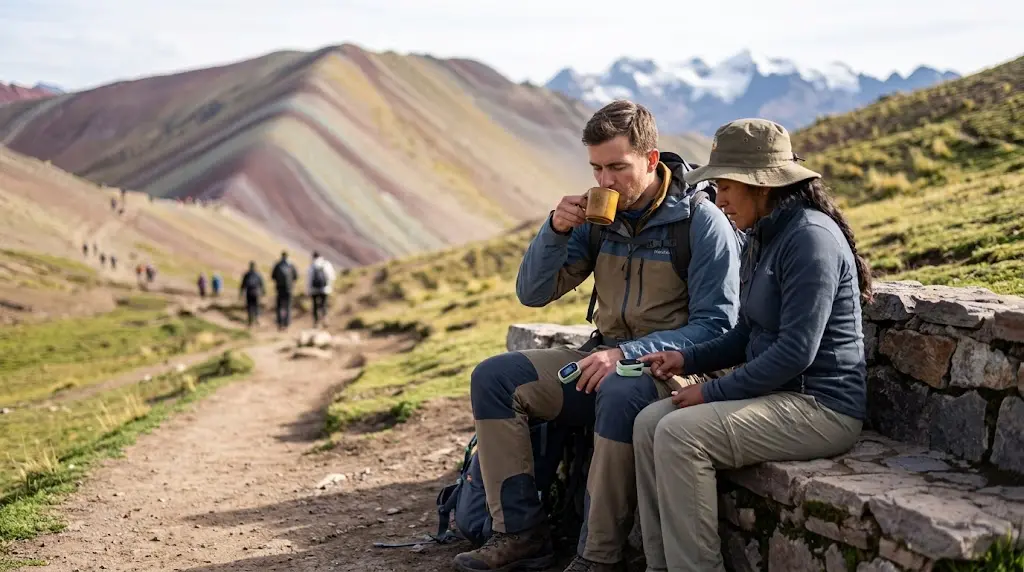
Symptoms of Soroche Rainbow Mountain Hikers Face
¿What symptoms of soroche rainbow mountain hikers encounter?
The most common symptoms of soroche rainbow mountain visitors experience include a dull, throbbing headache, lightheadedness, loss of appetite, and mild nausea. These indicators typically surface when ascending too rapidly without adequate acclimatization in Cusco.
Learning to spot altitude sickness on Rainbow Mountain early allows hikers to adjust their pace or utilize supplemental oxygen before symptoms intensify.
Over 60% of unacclimatized travelers experience mild soroche symptoms when exceeding 4,500 meters elevation in Peru.
Acknowledging early mountain sickness symptoms is a mark of smart, experienced high-altitude hiking.
¿How do you distinguish normal fatigue from mild altitude sickness?
Physical exertion on steep mountain inclines causes heavy breathing and leg muscle soreness that improves after a five-minute rest break. In contrast, altitude sickness symptoms persist or worsen even while sitting completely still at the mountain pass.
Key differences between physical exertion and soroche:
- Exertion fatigue: Breathing rate normalizes rapidly upon stopping; muscles feel tired but head remains clear.
- Mild soroche: Persistent throbbing sensation behind the forehead; light dizziness that worsens when standing.
- Progressive AMS: Nausea triggered by food smells, accompanied by unexplained chills or general apathy.
If resting for ten minutes fails to ease your headache or nausea, altitude sickness is the likely cause.
¿Why do throbbing headaches occur during rapid elevation climbs?
High-altitude headaches stem from mild swelling in brain tissues caused by low blood oxygen levels. The body expands cranial blood vessels in an effort to maintain oxygen delivery, increasing pressure within the skull.
Managing high-altitude headaches on trail
Mild altitude headaches usually respond well to over-the-counter anti-inflammatory medications like ibuprofen, paired with steady hydration and controlled breathing.
Ibuprofen effectively reduces high-altitude headache severity by dampening cranial vascular inflammation.
¿What role does dehydration play in worsening mountain sickness?
Cold, dry mountain air causes rapid moisture loss through exhalation, while elevated ventilation rates accelerate fluid depletion. Dehydration reduces overall blood volume, forcing the heart to work even harder to circulate limited oxygen through the body.
Combining dehydration with high elevation amplifies soroche symptoms like dizziness, fatigue, and intense headaches.
Hikers lose up to 1 liter of water per hour through respiration alone in dry high-altitude environments.
Drinking water consistently keeps your vascular system functioning efficiently in thin air.
¿How to address symptoms of soroche rainbow mountain early?
Taking action at the first sign of symptoms of soroche rainbow mountain prevents mild discomfort from progressing into a serious condition. Slowing your walking pace to match your breathing rhythm is the most immediate self-correction you can make on the trail.
Immediate steps to manage early soroche:
- Inform your trekking guide immediately so they can monitor your heart rate and SpO2 levels.
- Take small, frequent sips of water or electrolyte solution rather than gulping large amounts at once.
- Inhale emergency bottled oxygen for 5 to 10 minutes if lightheadedness or nausea persists during the climb.
Addressing early symptoms keeps your high-altitude hike safe. Vigilance and proper pacing ensure you reach the summit safely.