Acclimatization in Cusco: What to Plan for Day One
Acclimatization in Cusco decides how many days your trip needs, because a city at 3,350 meters does not let you start with the hardest outing. Most itineraries that work put gentle days first and big climbs later, and that order shapes how long you should stay. Ignoring that order is a risk, and it is easy to avoid.
These are the questions travelers ask most often, with answers drawn from the CDC and from trip plans for three, five and seven days.
Why does acclimatization in Cusco matter?
Cusco sits around 3,350 meters above sea level. Your body may need time before harder mountain trips, and a short walk that feels easy at sea level can feel long here.
The CDC advises lighter activity during the first 48 hours at high elevation. The practical consequence is simple: whatever you book for the first two days should be something you could do half asleep.
What should you do on the first day?
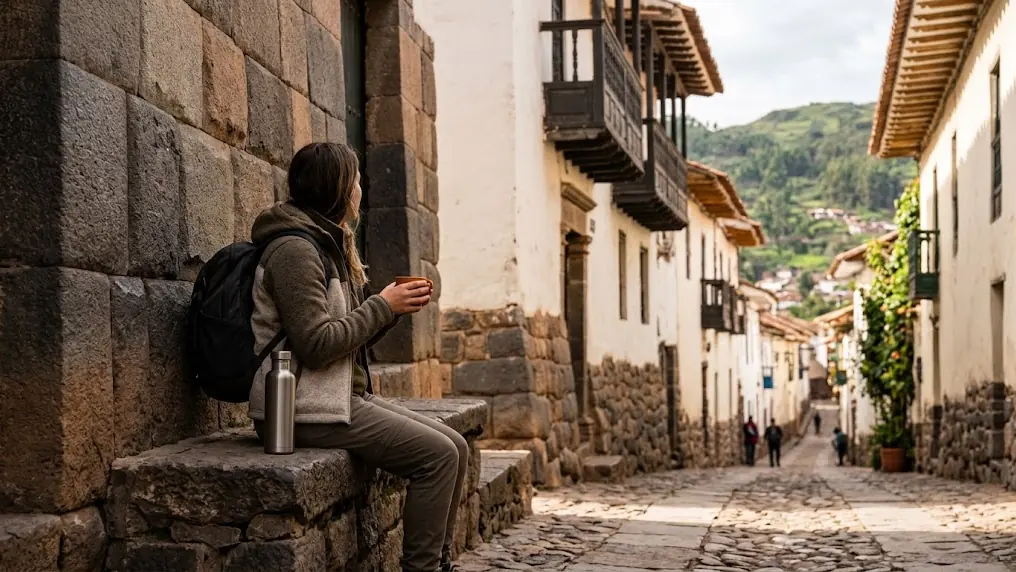
Keep it easy. Begin around the Plaza de Armas after breakfast and walk through the historic center without rushing between stops. Qorikancha fits well in the first morning, and San Blas makes a slower afternoon, with small shops and cafes.
Sacsayhuamán is worth adding before dinner, and taking a taxi uphill saves your energy. The CDC also recommends avoiding alcohol for the first 48 hours at altitude, so skip the late night. Your first day is not the time for heroics. Give your body a chance to adjust, and a good itinerary will include recovery time later as well.
How fast can you gain altitude?
The CDC guidance for travelers above 3,000 meters is to move your sleeping altitude by no more than 500 meters per day and to plan an extra day of acclimatization for every additional 1,000 meters of sleeping altitude gain. Cusco is already past that line.
That is why a good plan puts the harder outings after you have spent a few nights in the region. If you want a day-by-day example, this guide on how to plan each stay shows how the order changes between three, five and seven days.
When is Humantay Lake a good idea?
Later in the trip. The lake sits around 4,200 meters above sea level, which is roughly 850 meters higher than Cusco. The hiking distance is not huge on its own, and altitude is what makes the climb demanding.
In the five day plan it lands on day five for exactly that reason, after the city, the Sacred Valley, Machu Picchu and an easy day. Many tours sell Humantay as a one-day trip, so check departure times, because pickups can start before sunrise.
Where does Rainbow Mountain belong?
Near the end of your stay. Vinicunca reaches roughly 5,200 meters, most trips take nearly the whole day, and the drive is long and starts very early.
If you only have three days, skip it. In the seven day plan it takes the last day, after a deliberately light day for museums, San Blas or a food tour.
What if you only have three days?
Three days can work surprisingly well with planning. Spend the first on central Cusco, the second in the Sacred Valley with Pisac and Ollantaytambo, and the third at Moray and Maras. That last pair keeps the third day easier than Rainbow Mountain would: you still get scenery without a punishing climb.
If you stay a night in Ollantaytambo, you can save travel time, and it is also useful for train connections. Either way, the three day version leaves the high mountain outings for another trip.
How many days give you enough time?
Three days work for Cusco and the Sacred Valley. Five days give enough room for Machu Picchu. Seven days make the most sense for hikers, because Humantay and Rainbow Mountain can wait until your body has adjusted.
Do not plan your trip by distance alone: altitude changes how hard a short hike can become. Leave space between the bigger outings and you will see more with less rushing. When you compare tour companies, ask whether emergency oxygen is available on mountain trips and what happens when the weather changes the itinerary.