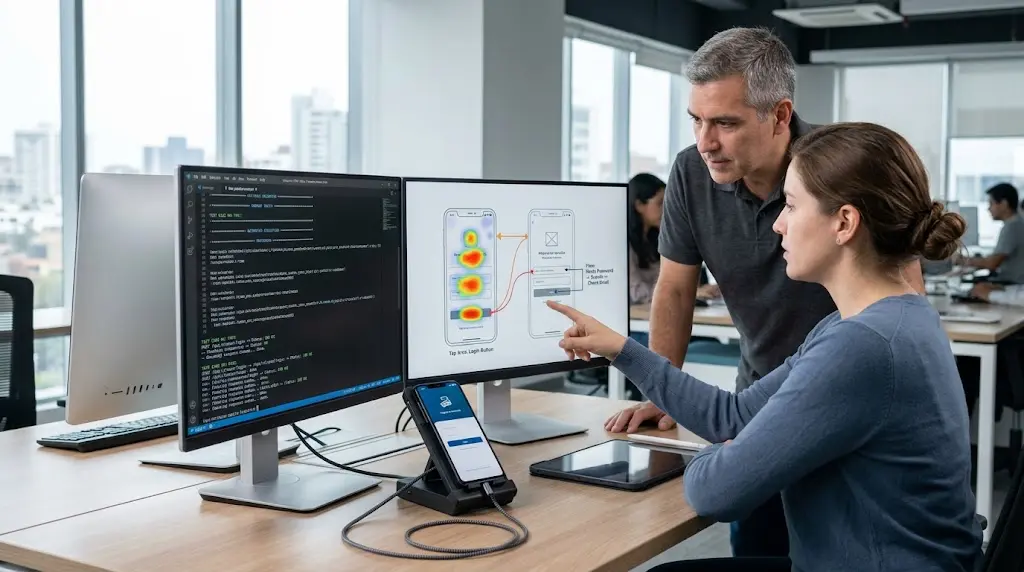
Functional Testing vs Usability Testing: Key Differences
What is the fundamental difference in functional testing vs usability testing?
The distinction between these two quality assurance disciplines lies in what they measure: specification compliance versus human efficiency.
Functional validation asks, “Does this feature work as specified?” It verifies inputs, outputs, data persistence, and security controls against formal requirement documents. Usability evaluation asks, “Can users complete their intended task without confusion or delay?”
The core conflict emerges when engineering teams confuse a working feature with an accessible one. A login portal can pass one hundred percent of automated unit tests while still driving users away if password reset instructions are buried under obscure navigation menus.
How do functional bugs differ from usability friction points?
Distinguishing system defects from user experience friction helps teams triage backlog items and allocate engineering resources effectively.
- Functional Bugs: System crashes, unhandled server errors, broken links, database corruption, or incorrect calculation logic.
- Usability Friction Points: Unclear iconography, low visual contrast ratios, buried call-to-action buttons, or multi-step checkout processes.
- Hybrid Defects: Slow screen rendering that technically loads data but causes perceived application unresponsiveness.
Addressing both defect categories prevents catastrophic user churn rates. While functional defects halt operations immediately, subtle usability flaws erode user trust over time.
Why do fully functional applications still fail in the competitive mobile market?
Mobile users expect zero-friction interactions, leaving very little tolerance for poor interface architecture.
The cost of cognitive overload
An app may process payment transactions flawlessly, but if completing a purchase requires navigating through five cluttered forms, users will abandon their carts for a competitor’s streamlined platform. Software success is rarely determined by feature count alone; it hinges on how effortlessly users achieve their goals.
Reducing cognitive friction **directly correlates with improved retention metrics** across all digital touchpoints.
How can QA teams balance technical execution with user-centric design validation?
Achieving equilibrium between code stability and intuitive design requires integrating both testing methodologies throughout the development life cycle.
- Automate regression and integration test suites to catch functional breaks early in build pipelines.
- Conduct exploratory testing sessions focused on real-world user journeys and touch-target ergonomics.
- Incorporate usability heuristics reviews during initial UI/UX prototyping phases before writing backend logic.
Quality assurance extends far beyond green test logs. When engineering and design teams collaborate on holistic test plans, software products achieve both technical excellence and genuine user adoption.