Peruvian Culinary Journey: Lima and Sacred Valley Delights
What makes a Peruvian culinary journey from Lima to the Sacred Valley unique?
The transition from Lima’s sea-level dining rooms to the high-altitude valleys near Cusco illustrates how extreme geographical contrasts foster extraordinary culinary diversity.
Peru features eighty-four of the world’s hundred and seventeen distinct life zones, allowing fresh marine produce and high-elevation crops to flourish within the same national borders.
Lima serves as the coastal gateway, where Pacific ocean currents yield an unmatched variety of fish, shellfish, and seaweeds. Meanwhile, the Sacred Valley situated over eight thousand feet above sea level nurtures ancient grains, heirloom tubers, and mineral-rich salts.
The genius of contemporary Peruvian cuisine lies in its ability to respect these traditional roots while pushing modern presentation boundaries. This ecological contrast turns every meal into a lesson in microclimates.
How does coastal seafood cuisine define Lima’s fine dining scene?
Lima holds the title of South America’s culinary capital largely due to its masterly interpretation of fresh ocean harvest.
Coastal gastronomy centers around simplicity, acid balance, and immediate freshness, elevated through techniques refined across generations of Japanese, African, and Spanish heritage.
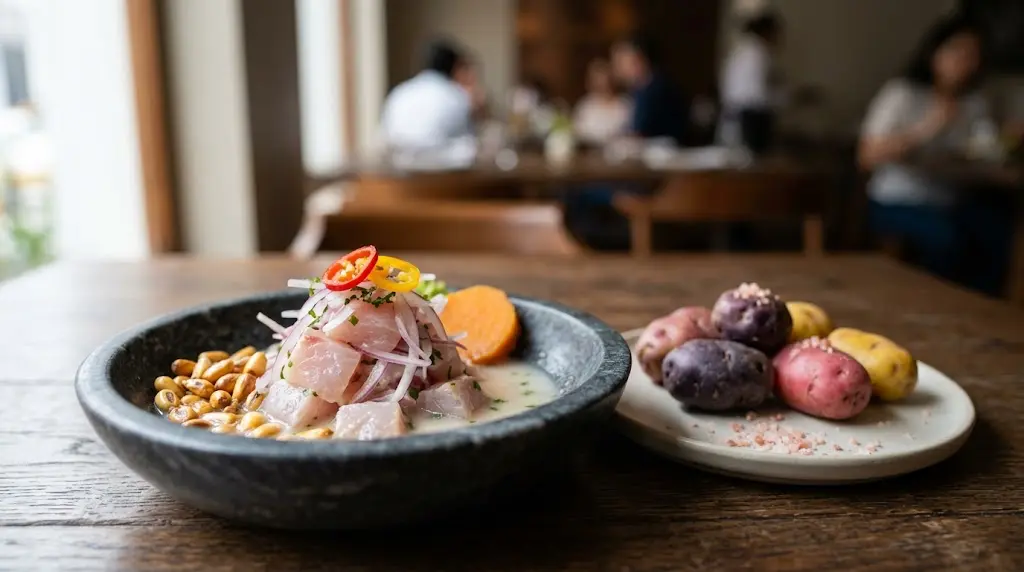
- Classic Ceviche: Fresh catch marinated briefly in lime juice, spiced with rocoto peppers, and balanced with sweet potato.
- Tiradito: Sashimi-style sliced raw fish dressed in ají amarillo sauce without raw onion additions.
- Causa Rellena: Layered whipped yellow potato seasoned with lime and ají, filled with delicate seafood salad.
Oceanfront dining establishments rely on morning market arrivals to guarantee peak flavor profile. Freshness dictates culinary success on the coast, making seafood in Lima a world-renowned benchmark for marine gastronomy.
What role do native Andean ingredients play in Sacred Valley gastronomy?
Ascending into the Sacred Valley reveals an agricultural sanctuary where food remains deeply intertwined with Pachamama, the Andean Earth Mother.
Unlike the seafood-dominated coast, mountain cuisine revolves around hearty tubers, native grains, and traditional earth-oven cooking methods known as Pachamanca.
Ancient agricultural wisdom
Local communities continue to harvest giant white corn, ancient quinoa varieties, and thousands of native potato cultivars using ancestral terracing systems. There is something profound about tasting tubers baked directly in hot stones buried beneath mountain soil.
Using Maras pink salt harvested from prehistoric subterranean springs enhances these earth-bound flavors, linking modern diners directly with pre-Inca culinary traditions.
How can travelers experience the ultimate regional food tour in Peru?
Designing a memorable culinary trip across Peru requires balancing high-end tasting menus in the capital with authentic farm-to-table encounters in the highlands.
Start with dinner at Lima’s world-ranked restaurants before flying to Cusco to explore local valley markets, artisanal salt pans, and agro-tourism initiatives.
- Reserve urban dining experiences months in advance to secure seats at top coastal establishments.
- Visit the Maras salt mines and Moray agricultural laboratories to understand traditional farming techniques.
- Participate in interactive cooking workshops that highlight ancestral ingredient preservation.
Curating a balanced itinerary maximizes cultural immersion. When travelers engage with both coastal chefs and Andean farmers, they gain an unforgettable perspective on global food heritage.