How to choose authentic Lima culinary tours this season
Why are curated Lima culinary tours essential for deep food exploration?
Uncovering the layers of a complex food city requires more than a simple maps application or a random taxi ride through downtown. Specialized Lima culinary tours introduce travelers to the raw materials and history that form the basis of Creole, Andean, and Nikkei fusion cooking.
Without an expert interpreter, a foreign diner might overlook the subtle differences between different types of native yellow chilis or miss the historical context behind a slow-cooked stew. These curated experiences connect the plate directly with the cultural identity of the land, proving that great food is always a product of human migration.
What architectural neighborhoods define the city’s best gastronomy routes?
The urban layout of the city divides its gastronomic specialties across distinct historical sectors, each reflecting a specific phase of immigration and economic development. Exploring these routes allows you to see how geography influences daily eating habits.
The most impactful food walks concentrate their itineraries within three distinct urban zones:
- The Historical Center: Home to old working-class bars serving hearty Creole plates and slow-cooked stews since the colonial era.
- Barranco: A bohemian enclave where modern chefs re-engineer street food classics and artisanal desserts inside restored mansions.
- Miraflores: A coastal hub that blends traditional neighborhood food markets with high-end cevicherías and modern experimental kitchens.
How do local cevicherías maintain strict freshness standards for raw seafood?
The international reputation of Peruvian seafood rests entirely on the immediate processing of the morning catch, a technical requirement that local kitchen staff take very seriously. A high-quality establishment never stores fish overnight, relying on direct coordination with local fishing docks.
The cold chain and lime-curing mechanics
The preservation process requires maintaining a strict cold chain from the moment the fish leaves the water until it hits the prep station. What surprises many western chefs is that the seafood is cured in fresh key lime juice for mere seconds rather than hours. This precise acid denaturation keeps the internal textures firm while maximizing the natural clean flavors of the ocean.
What culinary secrets separate mass excursions from small-batch food walks?
Large tour groups packed into commercial buses are restricted to high-capacity restaurants that prepare food in massive quantities hours in advance. This mass production dilutes the delicate seasoning profiles and ruins the temperature contrasts that define excellent street food and fresh raw fish.
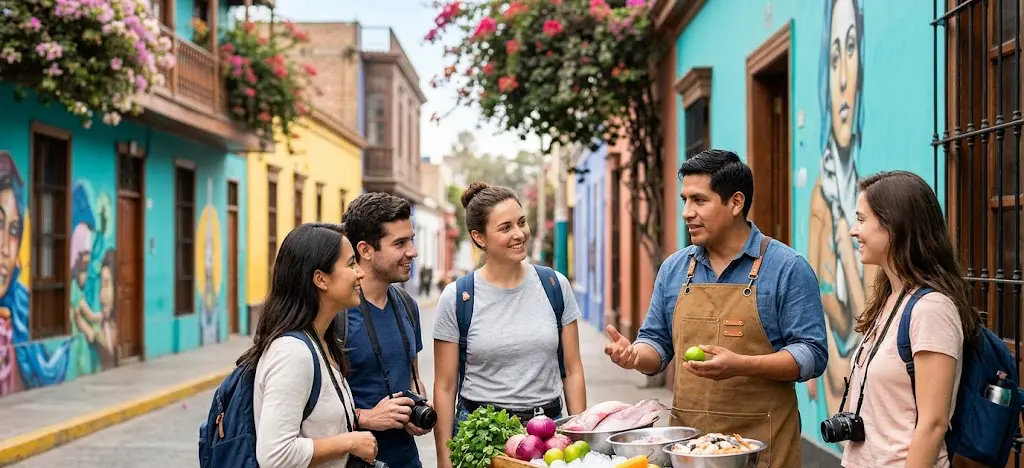
Small-batch food walks limited to six participants can slip into tiny market stalls and exclusive counter taverns that refuse to cater to large crowds. There is a distinct drop in quality when a kitchen tries to serve fifty plates of raw fish simultaneously compared to a single, hand-crafted batch. Choosing intimate groups guarantees direct conversation with the line cooks.
What specific details ensure safe and highly rated Lima culinary tours?
Validating the safety standards of your chosen excursion company involves analyzing their operator licensing, vehicle permits, and ingredient-sourcing transparency. Investing in premium, licensed networks guarantees that every food stall on the itinerary undergoes routine health inspections.
Ensure your booking meets these core operational parameters before setting off:
- Confirm the agency employs official tour guides registered with the Ministry of Foreign Trade and Tourism.
- Verify that the tour price covers all municipal market entrance fees and mineral water supplies transparently.
- Check that the itinerary avoids unpasteurized dairy and unregulated street stalls lacking clean water access.
By selecting professional companies who value health compliance, you experience the finest Lima culinary tours while supporting responsible small businesses.