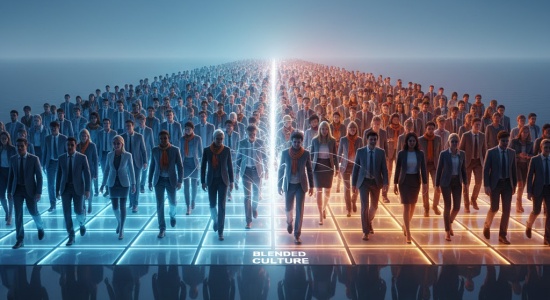
Blended Culture: Emotional Ownership in Hybrid Teams
In traditional outsourcing, the relationship between a client and a vendor is often purely transactional. The vendor delivers a set of requirements, the client pays the invoice, and both parties move on. However, in high-stakes software development, this “us vs. them” mentality creates a dangerous gap in accountability.
To truly innovate, a team needs more than just technical skills; they need Emotional Ownership. This is the core philosophy behind the Making Sense Hybrid Teams model. By blurring the lines between “internal” and “external,” companies engineer a unified, “blended culture” where the product’s success is a shared destiny.
The Death of the “Not My Problem” Mentality
The biggest friction in software development occurs when an external team feels like they are just “renting” their time. If a bug appears, the external team points to the spec sheet, while the internal team points to the lack of effort.
The hybrid model destroys this barrier. Because Making Sense professionals are embedded in the client’s internal structure—sharing the same Jira boards and Slack channels—the psychological distance vanishes.
When a developer sees a flaw, they flag it because it affects their team’s product. This shift from “contractual delivery” to “emotional ownership” is what separates a good product from a great one.
Building Trust Through Radical Transparency
A blended culture cannot exist without a foundation of trust. Making Sense builds this by encouraging its professionals to practice radical transparency from day one.
In a hybrid environment, trust is built through:
- Shared Vulnerability: Admitting mistakes invites the internal team to be equally honest.
- Eliminating Information Asymmetry: Removing “shadow” communication channels ensures everyone has the same context.
- Peer-to-Peer Accountability: Accountability happens between peers during code reviews, creating a culture of mutual respect.
The Psychological Impact: Fresh Energy and Shared Wins
Software development is a marathon, and internal teams can often suffer from burnout. Bringing in a Making Sense team acts as a cultural transfusion.
The “New Teammate” effect is powerful. Making Sense professionals bring curiosity and a “can-do” attitude that revitalizes the internal staff. Conversely, the external team feels validated when treated as true teammates whose opinions matter.
Creating a Unified “Source of Truth”
A blended culture thrives when there is only one “Source of Truth.” In the Making Sense model, this means:
- Shared Tools: Everyone uses the same version control and documentation platforms.
- Shared Rituals: Planning sessions and retrospectives are done together, celebrating wins as a single unit.
- Shared Values: Integrating honesty, empathy, and technical excellence into the client’s existing core values.
Conclusion: The Strength of One Team
For 2026, the competitive advantage for any tech company lies in its culture. By moving beyond traditional staff augmentation and embracing a blended hybrid model, companies gain a resilient, high-trust environment.
Making Sense doesn’t just provide developers; they provide the cultural glue that turns a group of talented individuals into a high-performance, unified engineering force.